Now let’s cook
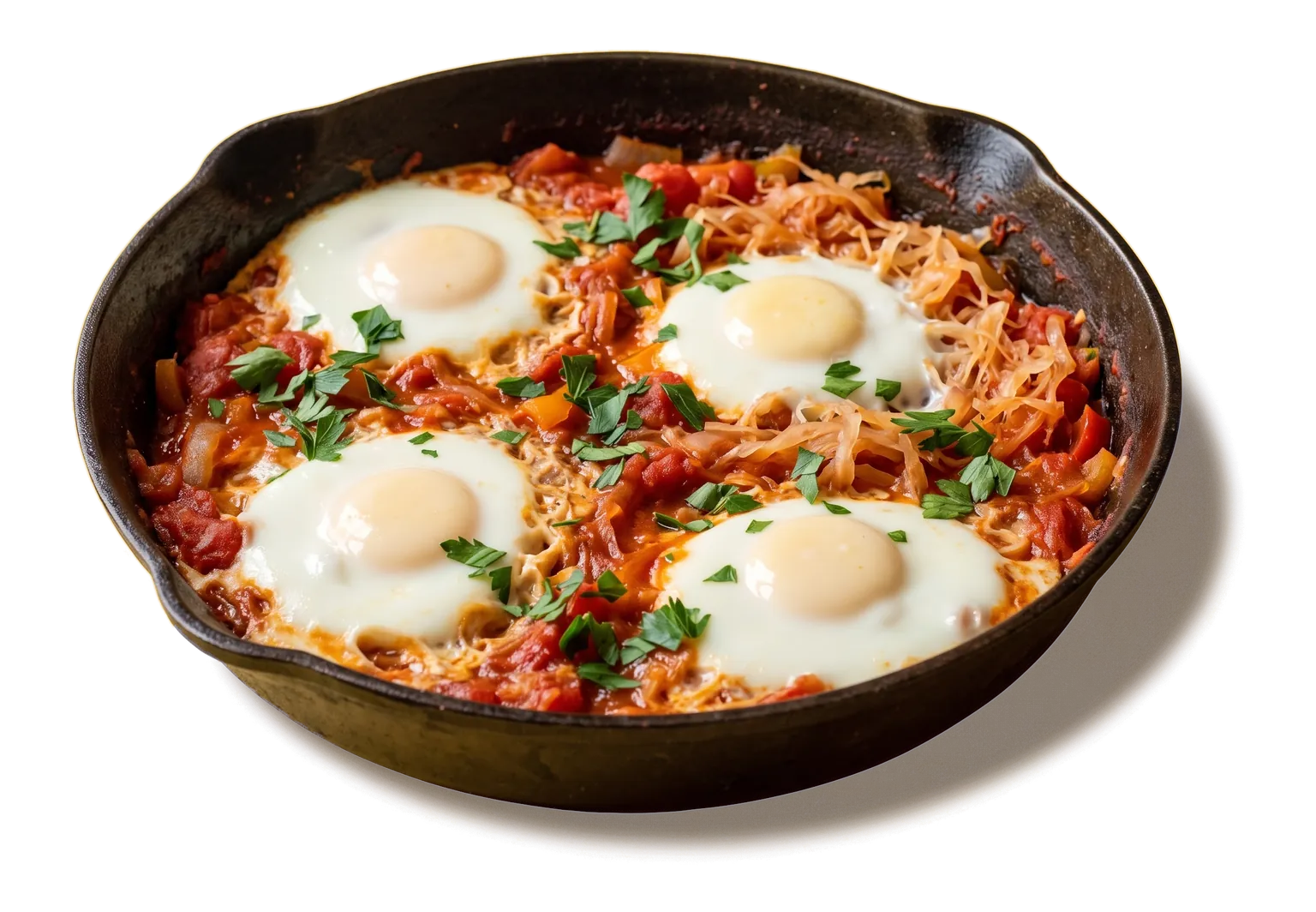
The sauerkraut goes straight into the sauce, in with the tomatoes and peppers. The sauce does not blush: it is red already.
Ingredients
- 2 tbsp olive oilmade from the fruit of the olive tree
- 250 g onionbulb onion: the bulbs are peeled and cut
- 150 g sweet pepperfruits of many colours, cooked and eaten as a vegetable
- 6 g garlicfresh garlic: the cloves are peeled and grated
- 7 g paprikared peppers, dried and milled to a powder
- 300 g tomatofresh ripe red tomato
- 100 g sauerkrautshredded white cabbage that has been fermented, which gives it a sour edge
- 2 g saltfine table salt
- 1 g black pepperground black pepper
- 4 eggslarge hen’s egg, about 50 g without the shell
- 20 g parsleyfresh parsley leaves, used as a herb
Method
Finely chop 250 g of onion. Deseed 150 g of sweet pepper and cut it into small dice. Chop 6 g of garlic (2 cloves). Cut 300 g of tomatoes into thin wedges.
Put 100 g of sauerkraut in a colander and let the excess brine drain off. Do not rinse or squeeze the sauerkraut.
Heat 2 tbsp of olive oil over a medium heat in a deep frying pan with a lid, add the onion and fry for 5–6 minutes, stirring, until it turns translucent.
Add the pepper and cook for 5 minutes, stirring. Add the garlic and 7 g of sweet paprika and cook for another 30 seconds.
Add the tomatoes and the sauerkraut and simmer over a low heat for 20–25 minutes, stirring from time to time, until the sauce thickens.
Taste the sauce: the sauerkraut is already salty. Add 2 g of salt and 1 g of black pepper if needed, and turn the heat down.
With a spoon, make 4 wells in the sauce and break an egg into each, keeping the yolks whole. Cover the pan with the lid and cook for about 8 minutes, until both the whites and the yolks are firm: at least 74 °C in the centre of the yolk.
Sprinkle the shakshuka with 20 g of chopped parsley and serve straight from the pan.